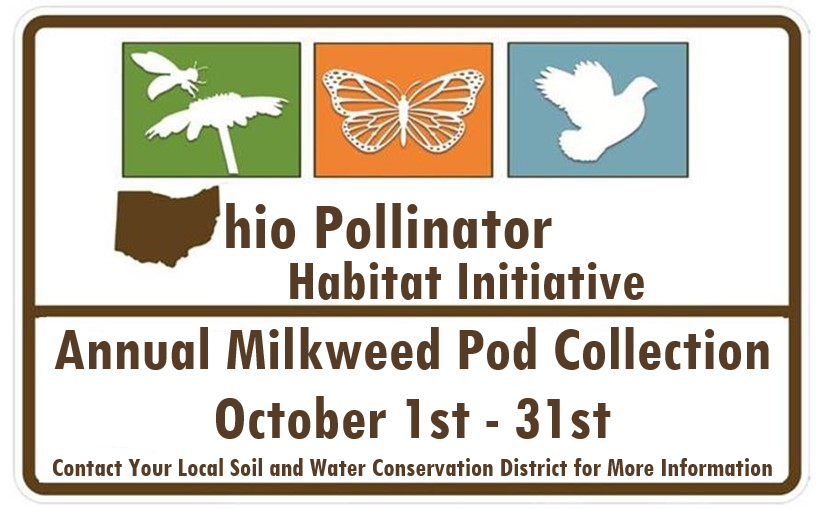
Seneca Conservation District again will serve as a site for the annual milkweed pod collection, set for Oct. 1-31.
Ohio Pollinator Habitat Initiative collects milkweed pods from various sources, including Seneca Conservation District. Local conservation groups, Scouting organizations and citizens are asked to assist in the collection of pods.
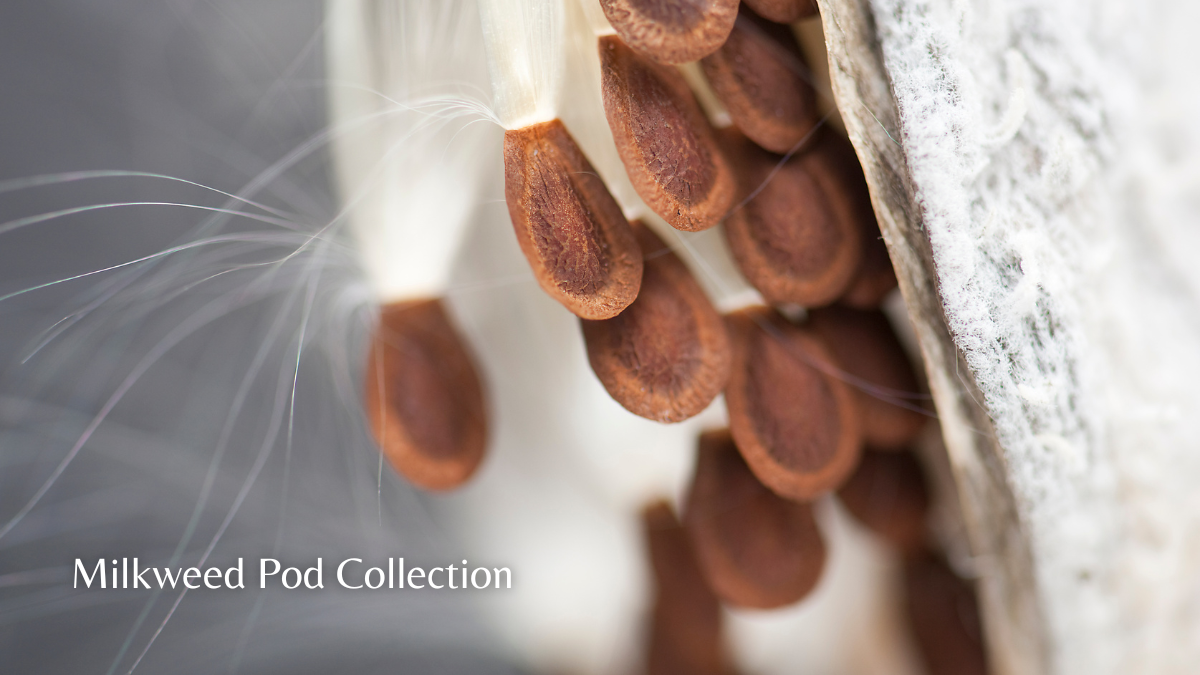
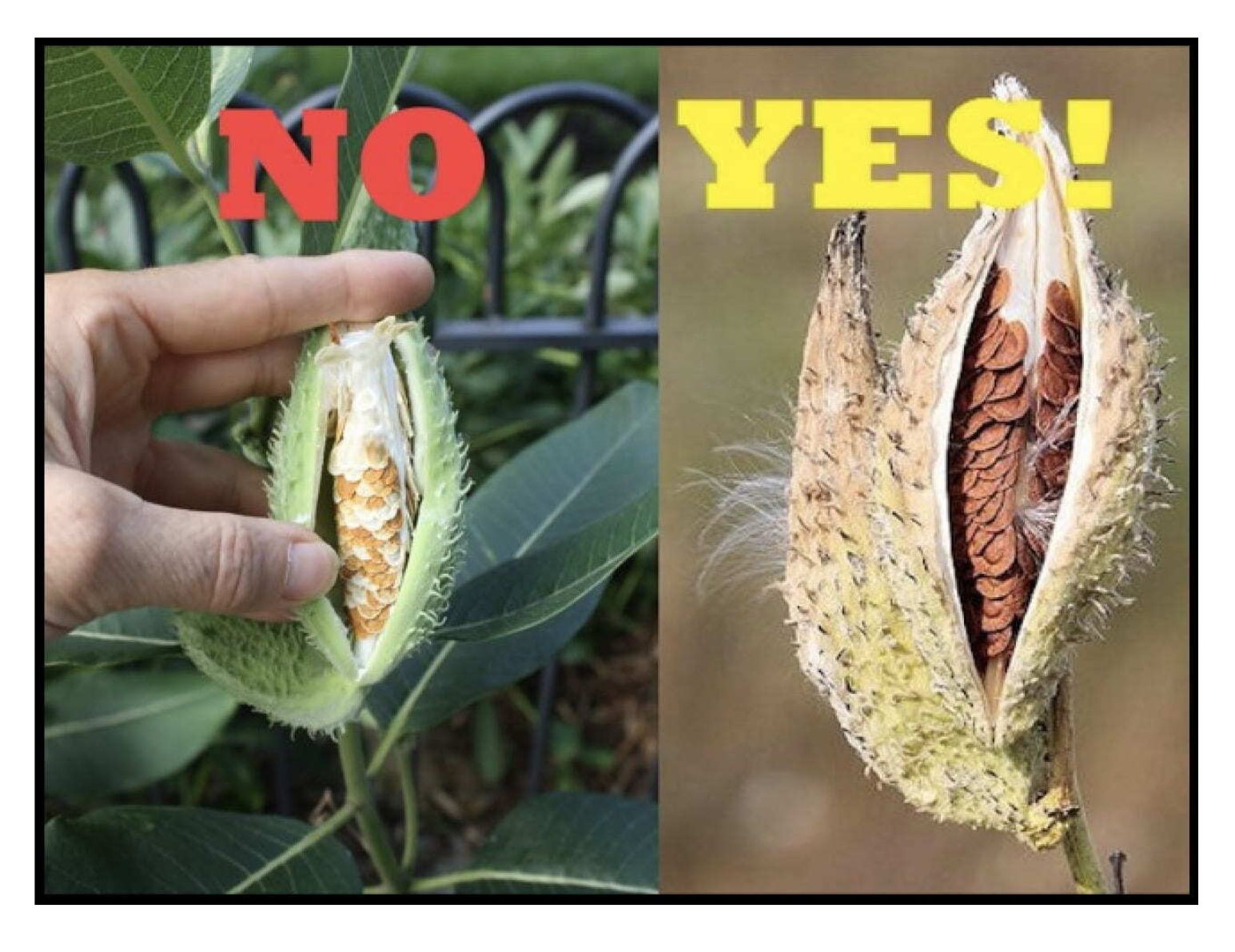
The pods must be collected when they have dried and are just about to open. Participants are asked not to collect any green pods as they cannot be processed because the seeds within have not matured.
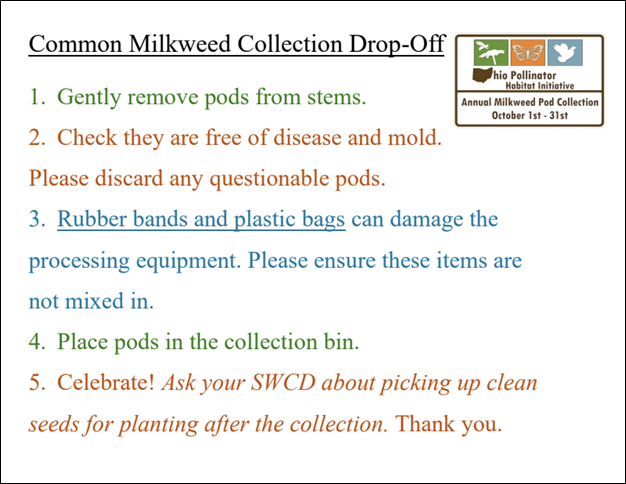
Pods should be gently removed from stems and checked to be sure they are free of disease and mold. Any questionable pods should be discarded.
It is strongly recommended that only 25 percent of the pods be harvested off each plant. That allows the plant to propagate in the area where they inhabit.
Paper grocery bags should be used to collect and store the pods. Rubber bands and plastic bags should be avoided as they can damage the processing equipment.
People who harvest the pods are encouraged to note the date and county of collection on the paper bag and then can drop them off in the labeled plastic recycling tote at the Seneca Conservation District office, 3140 S. SR 100, Tiffin. The drop-box is located at the rear entrance to the building.
Milkweed is the preferred food and nesting source for monarch butterflies. Monarch populations are dwindling in numbers due to insufficient habitat – the milkweed plant – attributed to land-use changes and weather events.
The monarch butterfly has a unique life cycle that spans four generations in a single year, with the last generation migrating from its northern birthplace in the upper Great Lake states and southern Canada, back down to Mexico, where they over-winter.
The adult monarch uses the nectar of the milkweed and other flowering plants in their diet, while the larval monarch caterpillar feeds exclusively on the milkweed plant.
For more information about the collection, contact District Technician Maria Wagner at [email protected] or (419) 447-7073.
Questions?
Drop Off Location:
- 3140 S SR 100, Tiffin